Medical negligence is one of the most devastating forms of professional misconduct. When a patient places their trust — and often their life — in the hands of a doctor or hospital, any failure to meet the expected standard of care can lead to irreversible harm, prolonged suffering, or even death. In India, patients and their families have strong legal remedies available, and a medical negligence legal notice is the crucial first step in holding negligent healthcare providers accountable.
This comprehensive guide covers everything you need to know about medical negligence in India — from understanding what constitutes negligence under Indian law, the types of medical errors that give rise to liability, the legal framework governing patient rights, to the step-by-step process of drafting and sending a legal notice. Whether you are dealing with a misdiagnosis, a surgical error, wrong medication, or hospital-acquired infections, this article will help you navigate the legal landscape with confidence.
What Is Medical Negligence Under Indian Law?
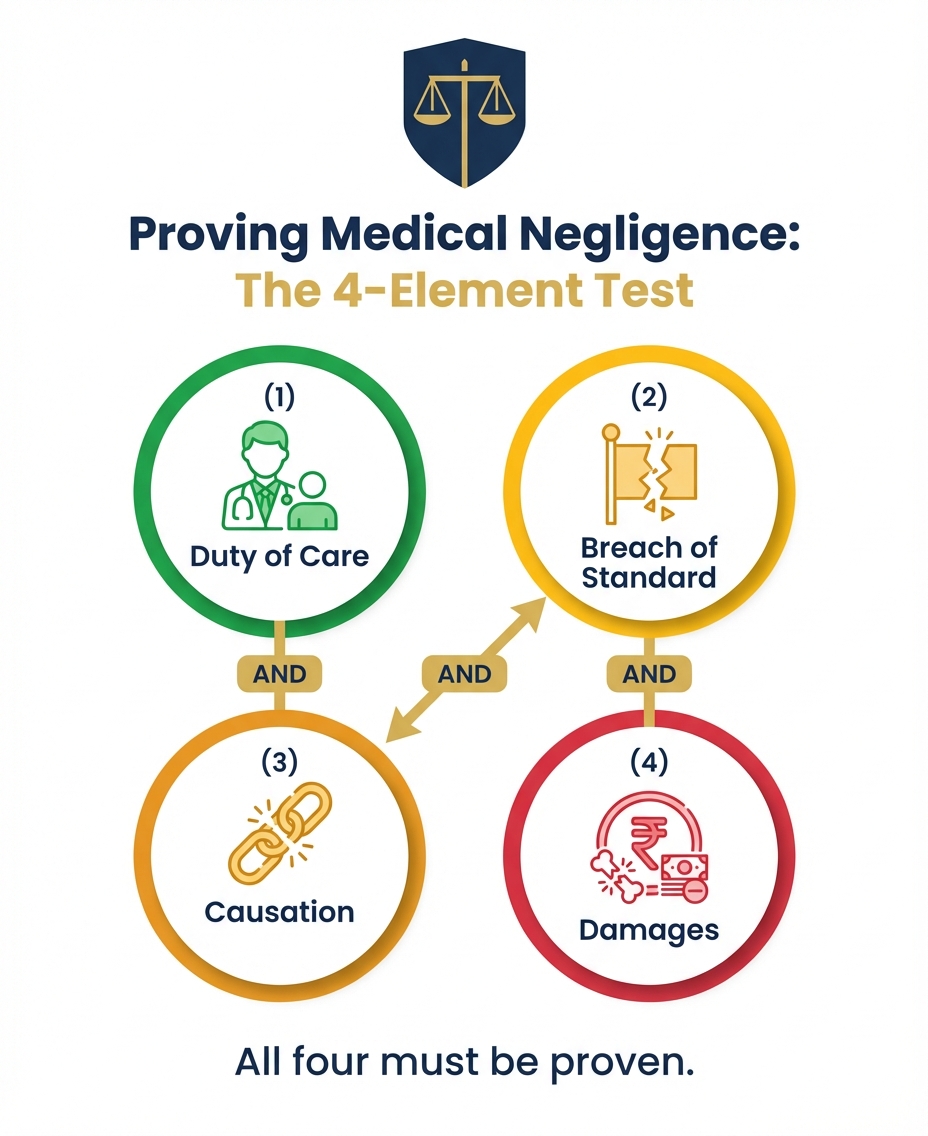
Medical negligence occurs when a healthcare professional — a doctor, surgeon, nurse, or hospital — fails to provide treatment that meets the accepted standard of medical practice, resulting in injury, harm, or death to the patient. Under Indian law, negligence is established when three elements are proven: the medical professional owed a duty of care to the patient, there was a breach of that duty, and the breach directly caused the injury or harm suffered.
The standard of care is assessed using the Bolam Test, which was adopted by the Supreme Court of India in several landmark judgments. Under this test, a doctor is not guilty of negligence if they acted in accordance with a practice accepted as proper by a responsible body of medical professionals skilled in that particular area. However, the Supreme Court has also clarified that the Bolam test is not absolute — a practice, even if widely followed, can still be deemed negligent if it does not withstand logical analysis.
A medical practitioner is not liable for negligence simply because a better alternative course of treatment was available or because the treatment did not yield the desired result. However, where the conduct falls below the standard of a reasonably competent practitioner in the field, it amounts to actionable negligence.
— Jacob Mathew v. State of Punjab (2005) 6 SCC 1
In the landmark case of Indian Medical Association v. V.P. Shantha (1995), the Supreme Court held that medical services fall within the ambit of "services" under the Consumer Protection Act, and patients who pay for treatment are entitled to seek redressal through consumer forums. This judgment fundamentally expanded the legal avenues available to victims of medical negligence in India.
Common Types of Medical Negligence
Medical negligence can take many forms, ranging from errors in diagnosis and treatment to systemic failures in hospital administration. Understanding the common types of negligence helps in identifying whether you have a valid claim and in framing an effective legal notice.
Misdiagnosis or Delayed Diagnosis
Misdiagnosis occurs when a doctor incorrectly identifies a medical condition, leading to wrong treatment or no treatment at all. Delayed diagnosis refers to an unreasonable delay in identifying the correct condition, which can allow the disease to progress to an advanced or untreatable stage. For example, failing to diagnose cancer in its early stages when standard diagnostic tests would have revealed it, or misidentifying a heart attack as acid reflux, can constitute actionable negligence. Courts have consistently held that while a doctor is not expected to be infallible, a failure to conduct basic diagnostic procedures that a reasonably competent doctor would have ordered amounts to negligence.
Surgical Errors
Surgical errors include operating on the wrong body part, leaving surgical instruments or sponges inside the patient's body, performing an unnecessary surgery, or causing damage to adjacent organs during a procedure. These errors are often referred to as "never events" because they should never occur under proper surgical protocols. Indian courts have awarded substantial compensation in cases involving surgical negligence, particularly where the error was avoidable through basic precautions such as pre-operative checklists and proper patient identification.
Wrong Medication or Dosage
Prescribing the wrong medication, an incorrect dosage, or a drug to which the patient has a known allergy can have life-threatening consequences. This includes failure to check for drug interactions when a patient is on multiple medications, administering expired medicines, or prescribing a medication contraindicated for the patient's condition. Pharmacists and nursing staff who administer incorrect medications also share liability in such cases.
Lack of Informed Consent
Every patient has the right to be fully informed about the nature of their condition, the proposed treatment, the associated risks and benefits, and the available alternatives before consenting to any medical procedure. Informed consent is a fundamental principle of medical ethics and law. Performing a surgery or procedure without obtaining proper consent — or without adequately explaining the risks — constitutes negligence. The Supreme Court has emphasized that consent obtained through incomplete or misleading information is not valid consent.
Hospital Negligence
Hospitals can be held vicariously liable for the negligence of their staff, including doctors, nurses, and technicians. Common forms of hospital negligence include hospital-acquired infections (HAIs) caused by poor sanitation and sterilization, failure of medical equipment due to inadequate maintenance, understaffing leading to delayed treatment, improper storage of blood or medication, and administrative failures such as mixing up patient records or test results. Under the doctrine of respondeat superior, the hospital bears responsibility for the acts of its employees performed within the scope of their employment.
Negligence in Emergency Care
Refusing to treat an emergency patient, demanding advance payment before providing life-saving treatment, or delaying critical care due to administrative procedures constitutes serious negligence. The Supreme Court of India has repeatedly held that no hospital or doctor can refuse emergency treatment to a patient, regardless of their ability to pay. Such refusal may attract both civil and criminal liability. The Clinical Establishments Act, 2010 further mandates that every clinical establishment must provide emergency treatment to any person who requires it.
Did You Know?
Under the Clinical Establishments Act, 2010, every hospital is legally obligated to provide first aid and emergency medical care to all patients, irrespective of their ability to pay. Refusal to do so is a punishable offence and can attract both criminal prosecution and civil damages.
Legal Framework for Medical Negligence in India
India has a multi-layered legal framework that addresses medical negligence through consumer protection law, criminal law, regulatory statutes, and professional ethics codes. Understanding these different legal avenues is essential for choosing the right course of action.
Consumer Protection Act, 2019
Following the landmark judgment in Indian Medical Association v. V.P. Shantha (1995), medical services are firmly established as "services" under the Consumer Protection Act. Patients who pay for medical treatment — whether directly or through insurance — are consumers and can file complaints before consumer forums for deficiency in service. The Consumer Protection Act, 2019 provides a faster and less expensive remedy compared to civil courts. Complaints can be filed before the District, State, or National Consumer Disputes Redressal Commission based on the value of the claim.
Indian Penal Code / Bharatiya Nyaya Sanhita (Criminal Negligence)
In cases of gross negligence leading to death or serious injury, the medical professional may face criminal prosecution. Under the Indian Penal Code (IPC) — now being replaced by the Bharatiya Nyaya Sanhita (BNS) — the relevant provisions include: Section 304A IPC / Section 106 BNS (causing death by negligence, punishable with imprisonment up to two years, or fine, or both), Section 337 IPC / Section 125 BNS (causing hurt by act endangering life or personal safety of others), and Section 338 IPC / Section 126 BNS (causing grievous hurt by act endangering life or personal safety). However, the Supreme Court in Jacob Mathew v. State of Punjab (2005) laid down that a medical professional should not be arrested merely on the basis of a complaint; the complaint must establish a prima facie case of gross negligence.
Clinical Establishments Act, 2010
The Clinical Establishments (Registration and Regulation) Act, 2010 mandates minimum standards for infrastructure, staffing, equipment, and record-keeping in hospitals and clinics. It requires all clinical establishments to be registered and to comply with prescribed standards. Failure to meet these standards — which can contribute to patient harm — constitutes a violation of the Act and can be used as evidence of systemic negligence in legal proceedings.
Indian Medical Council Regulations
The Indian Medical Council (Professional Conduct, Etiquette, and Ethics) Regulations, 2002 prescribe a code of conduct for all registered medical practitioners in India. These regulations cover duties toward patients, professional standards, and ethical obligations including maintaining patient confidentiality, obtaining informed consent, and providing emergency care. A violation of these regulations can result in disciplinary action by the State Medical Council or the National Medical Commission (which replaced the Medical Council of India), including suspension or removal of the doctor's registration. Breaches of these regulations can also serve as evidence of negligence in civil and consumer cases.
Criminal vs. Civil Negligence
Criminal prosecution under IPC/BNS requires proof of "gross negligence" — a much higher threshold than civil negligence. In Jacob Mathew v. State of Punjab, the Supreme Court emphasized that mere lack of adequate care, caution, or attention (simple negligence) is not sufficient for criminal prosecution. The negligence must be of a higher degree, showing reckless disregard for the patient's safety.
When to Send a Medical Negligence Legal Notice
A medical negligence legal notice should be sent when you or a family member has suffered harm due to a healthcare provider's failure to meet the standard of care. Here are common situations that warrant a legal notice:
- A patient suffered injury or death due to misdiagnosis or delayed diagnosis of a critical condition.
- A surgical error occurred, such as wrong-site surgery, retained surgical instruments, or damage to organs.
- Wrong medication or dosage was administered, leading to adverse effects or complications.
- A medical procedure was performed without informed consent or with inadequate disclosure of risks.
- The patient contracted a hospital-acquired infection due to poor hygiene or sterilization practices.
- A hospital refused emergency treatment or demanded advance payment before providing life-saving care.
- The hospital or clinic lacked the minimum standards of infrastructure, equipment, or staffing, contributing to the harm.
- Medical records were tampered with or withheld by the hospital to conceal evidence of negligence.
Act Quickly
Time is critical in medical negligence cases. The limitation period for filing a consumer complaint is two years from the date of the cause of action. Additionally, medical records, witness memories, and physical evidence can deteriorate over time. Send your legal notice as soon as you identify the negligence and begin collecting evidence immediately.
Suffered Due to Medical Negligence?
OpenVakil helps you draft a strong, legally sound medical negligence notice in minutes. Get expert guidance tailored to your specific case and take the first step toward justice.
Draft Your Notice NowKey Elements of a Medical Negligence Notice
A medical negligence legal notice must be meticulously drafted to establish a strong foundation for your claim. The following elements are essential:
- Patient's Details: Full name, age, address, and contact information of the patient (or legal representative in case of death).
- Doctor / Hospital Details: Name and registration number of the treating doctor, name and address of the hospital or clinic, and details of any other medical staff involved.
- Date and Duration of Treatment: When the patient was admitted, the dates of consultations, surgeries, or procedures, and the discharge date.
- Detailed Account of Events: A chronological narrative of the treatment received, the errors committed, and how the negligence caused harm — supported by medical records and reports.
- Nature of Negligence: Clearly identify the type of negligence — misdiagnosis, surgical error, wrong medication, lack of consent, hospital-acquired infection, or other.
- Injury or Harm Suffered: Describe the physical, emotional, and financial harm suffered by the patient as a direct result of the negligence.
- Medical Evidence: Reference attached medical records, diagnostic reports, prescriptions, hospital bills, and expert medical opinions supporting the claim of negligence.
- Legal Provisions Invoked: Cite the relevant sections of the Consumer Protection Act, 2019, IPC/BNS, Clinical Establishments Act, and Indian Medical Council Regulations.
- Relief and Compensation Demanded: Specify the amount of compensation sought, covering medical expenses, loss of income, pain and suffering, and any other damages.
- Time Frame for Response: Provide a reasonable deadline (typically 15 to 30 days) for the recipient to respond or settle the claim.
- Consequences of Non-Compliance: State that failure to respond within the stipulated period will result in filing a formal complaint before the consumer forum, criminal court, or medical council.
Step-by-Step Process to Send a Medical Negligence Notice
Follow these steps to effectively draft and send a medical negligence legal notice in India:
- Obtain and Preserve Medical Records: Under the Indian Medical Council Regulations, every patient has the right to obtain copies of their medical records. Request complete records from the hospital, including admission notes, treatment charts, surgical notes, discharge summaries, diagnostic reports, and billing statements. If the hospital refuses, this itself is a violation and can be cited in your notice.
- Get an Independent Medical Opinion: Consult an independent medical expert in the relevant specialization to review the records and provide an opinion on whether the standard of care was breached. Expert opinion is crucial in establishing negligence.
- Identify All Responsible Parties: Determine whether the notice should be addressed to the individual doctor, the hospital, or both. In many cases, both the doctor and the hospital share liability.
- Draft the Legal Notice: Prepare a comprehensive notice including all the key elements described above. Use clear, factual language and avoid emotional or inflammatory statements. You can draft this yourself, engage a lawyer, or use OpenVakil's AI-assisted drafting platform.
- Have the Notice Reviewed: Get the notice reviewed by a lawyer with experience in medical negligence cases to ensure legal accuracy and completeness.
- Send via Registered Post / Speed Post: Send the notice through India Post's registered post or speed post with acknowledgment due (AD). This provides proof of delivery. Send it to the registered address of the hospital and the doctor.
- Send a Copy via Email: Also send a scanned copy via email to the hospital's official email address for additional documentation.
- Retain All Copies and Receipts: Keep copies of the notice, postal receipts, tracking details, and email delivery confirmations.
- Wait for Response: Allow 15 to 30 days for the recipient to respond. Many cases are settled at this stage through negotiation.
- Escalate if Necessary: If there is no response or the response is unsatisfactory, proceed to file a formal complaint before the consumer forum, criminal court, or state medical council as appropriate.
Where to File a Medical Negligence Complaint
India provides multiple forums for filing a medical negligence complaint. The choice of forum depends on the nature and severity of the negligence, the relief sought, and the strength of the evidence available.
Consumer Forum
The Consumer Disputes Redressal Commission (District, State, or National level) is the most commonly used forum for medical negligence claims. Filing a complaint here is relatively quick, affordable, and does not require a lawyer. The consumer forum can award compensation for medical expenses, loss of income, pain and suffering, and punitive damages. Jurisdiction depends on the value of the claim: District Commission (up to Rs. 1 crore), State Commission (Rs. 1 crore to Rs. 10 crore), and National Commission (above Rs. 10 crore).
Criminal Court
In cases of gross negligence leading to death or grievous injury, a criminal complaint can be filed with the police or directly before the Magistrate under Section 304A / 337 / 338 of the IPC (or corresponding BNS sections). However, as per the Supreme Court's guidelines in Jacob Mathew v. State of Punjab, the complaint must establish a prima facie case of gross or reckless negligence. The court may seek a credible medical opinion before proceeding with the case.
State Medical Council
A complaint can be filed with the State Medical Council (or the National Medical Commission, which replaced the Medical Council of India) against the errant doctor for professional misconduct. The council has the power to suspend or permanently remove the doctor's registration, effectively barring them from practicing medicine. While the medical council does not award monetary compensation, filing a complaint here creates additional pressure on the doctor and generates an official record of misconduct that strengthens your case in other forums.
National Human Rights Commission
In severe cases where medical negligence amounts to a violation of the fundamental right to life under Article 21 of the Constitution, a complaint can be filed with the National Human Rights Commission (NHRC) or the State Human Rights Commission. This is particularly relevant in cases involving government hospitals, denial of emergency treatment, negligence affecting marginalized communities, or systemic failures in public healthcare institutions. The NHRC can recommend compensation and direct the government to take corrective action.
Proving Medical Negligence
Proving medical negligence requires demonstrating that the healthcare provider's conduct fell below the accepted standard of care and that this breach directly caused the harm. The burden of proof lies on the patient (or their representative). Here are the critical elements of proof:
- Medical Records: These are the most critical pieces of evidence. Obtain complete records including OPD notes, admission records, treatment charts, surgical notes, anaesthesia records, nursing notes, diagnostic reports, discharge summaries, and billing statements. Any gaps, alterations, or inconsistencies in the records can support your claim.
- Expert Medical Opinion: An independent opinion from a qualified medical professional in the same specialization is essential. The expert must opine that the treatment provided deviated from the accepted standard of care and that this deviation caused the harm.
- Prescriptions and Medication Records: These help establish what drugs were prescribed, in what dosage, and whether they were appropriate for the patient's condition.
- Witness Statements: Statements from family members, attendants, or other patients who witnessed the events can corroborate the sequence of events and the negligence.
- Photographs and Videos: Visual evidence of injuries, the condition of the hospital, or the surgical site can be powerful evidence.
- Hospital's Own Standards and Protocols: If the hospital had internal protocols, guidelines, or standard operating procedures that were violated, this can establish a breach of duty.
- Informed Consent Forms: Review the consent forms signed before the procedure. If consent was not obtained, was obtained under duress, or did not disclose material risks, this constitutes negligence.
Doctrine of Res Ipsa Loquitur
In certain cases, the doctrine of res ipsa loquitur ("the thing speaks for itself") applies. When the negligence is so obvious that it could not have occurred without someone being negligent — such as a surgical instrument left inside a patient's body — the burden of proof shifts to the doctor to explain how the error occurred. Indian courts have applied this doctrine in several medical negligence cases.
Need Help Gathering Evidence for Your Case?
OpenVakil's legal experts can guide you through the evidence collection process and help you build a strong medical negligence claim. Get personalized legal assistance today.
Consult an ExpertCompensation in Medical Negligence Cases
Compensation in medical negligence cases is determined based on the nature and extent of the harm suffered, the financial losses incurred, and the degree of negligence involved. Indian courts and consumer forums have awarded compensation ranging from a few lakhs to several crores of rupees depending on the circumstances. The following heads of compensation are commonly considered:
- Medical Expenses: Costs of corrective treatment, rehabilitation, ongoing medication, and future medical care necessitated by the negligence.
- Loss of Income: Compensation for wages or income lost during the period of incapacitation, as well as reduction in future earning capacity if the injury results in permanent disability.
- Pain and Suffering: Monetary compensation for physical pain, mental anguish, emotional distress, and loss of enjoyment of life caused by the negligence.
- Loss of Consortium: Compensation to the spouse or family members for the loss of companionship, support, and services of the injured or deceased patient.
- Punitive Damages: In cases of gross, reckless, or willful negligence, courts may award punitive damages to punish the wrongdoer and deter similar conduct in the future.
- Funeral Expenses: In cases of death due to negligence, the family can claim the costs of funeral and last rites.
- Legal Costs: The cost of filing the complaint, lawyer fees, and other litigation expenses.
In Nizam's Institute of Medical Sciences v. Prasanth S. Dhananka (2009), the Supreme Court upheld a compensation of Rs. 1 crore for medical negligence resulting in paralysis. In V. Kishan Rao v. Nikhil Super Speciality Hospital (2010), the Court awarded Rs. 2 lakhs for negligence in treating a malaria patient, reinforcing that even lower compensation amounts serve the purpose of accountability. The trend in Indian courts is toward increasingly substantial compensation awards in deserving cases.
Common Mistakes to Avoid
Many medical negligence claims fail or are weakened due to avoidable mistakes. Being aware of these pitfalls can significantly improve the strength of your case:
- Delaying Action: Waiting too long to send a legal notice or file a complaint can result in the case being barred by limitation. The two-year limitation period under the Consumer Protection Act starts from the date of the cause of action. Act promptly.
- Failing to Preserve Medical Records: Medical records are the backbone of any negligence claim. Request copies immediately. Under Indian Medical Council Regulations, patients have a right to their records. Do not rely on the hospital's willingness to provide them later — they may be altered or destroyed.
- Not Obtaining an Expert Opinion: Medical negligence is a technical subject. Without an independent expert medical opinion establishing that the standard of care was breached, your claim is significantly weakened.
- Sending a Vague or Emotional Notice: A legal notice that is vague, lacks specifics, or is filled with emotional language rather than factual assertions undermines your credibility. The notice must be precise, factual, and legally sound.
- Failing to Identify All Responsible Parties: Negligence may involve the surgeon, anaesthetist, nursing staff, and the hospital administration. Failing to name all responsible parties in your notice can limit your remedies.
- Ignoring Criminal Remedies: In cases of gross negligence leading to death or serious injury, filing only a consumer complaint may not be sufficient. Consider parallel criminal prosecution where warranted.
- Accepting a Low Settlement Under Pressure: Hospitals may offer a quick, low settlement to avoid litigation. Do not accept any settlement without consulting a lawyer and understanding the full extent of your damages.
- Not Maintaining a Proper Timeline: A disorganized presentation of facts and events weakens your case. Maintain a detailed, chronological timeline of all events, treatments, and communications.
Tampering with Medical Records
If you suspect that the hospital has tampered with or withheld medical records, immediately file an application before the consumer forum or court seeking preservation and production of records. Courts take a very dim view of record tampering and may draw an adverse inference against the hospital. You can also file a complaint with the police if destruction of evidence is suspected.
How OpenVakil Helps with Medical Negligence Notices
Medical negligence cases are among the most complex legal matters, requiring a thorough understanding of both medical standards and legal principles. OpenVakil bridges this gap by providing accessible, technology-driven legal assistance to victims of medical negligence across India.
With OpenVakil, you can draft a comprehensive, legally sound medical negligence notice in minutes. Simply answer guided questions about the incident — the nature of the treatment, the error that occurred, the harm suffered, and the details of the healthcare provider. Our AI engine drafts a detailed notice citing the relevant provisions of the Consumer Protection Act, IPC/BNS, and medical regulations, and our legal team reviews it for accuracy and completeness.
- AI-Powered Drafting: Generate a professionally worded medical negligence notice tailored to the specifics of your case, with accurate legal citations and clear demand clauses.
- Lawyer-Reviewed Quality: Every notice is reviewed by legal professionals experienced in medical law, ensuring it meets the standards expected by consumer forums and courts.
- Guidance on Evidence Collection: Receive practical advice on obtaining medical records, securing expert opinions, and preserving evidence critical to your claim.
- Affordable & Transparent: Access professional legal notice drafting at a fraction of traditional lawyer fees, with no hidden charges or surprises.
- End-to-End Support: From drafting the notice to guidance on filing formal complaints before consumer forums, medical councils, or criminal courts, OpenVakil supports you at every step.
Whether you are dealing with a botched surgery, a misdiagnosis that caused irreversible harm, hospital-acquired infections, or the denial of emergency treatment, OpenVakil equips you with the legal tools to hold negligent healthcare providers accountable and seek the compensation you deserve.
Take Action Against Medical Negligence Today
Don't let negligent doctors and hospitals escape accountability. Draft a powerful medical negligence legal notice with OpenVakil and take the first step toward justice and fair compensation.
Get Started for FreeMedical negligence is a serious violation of the trust that patients place in healthcare providers. Indian law provides robust remedies — from consumer forums and criminal courts to medical councils and human rights commissions — to ensure that victims receive justice and fair compensation. Armed with the right knowledge, proper documentation, a strong expert opinion, and a well-drafted legal notice, you can hold any doctor or hospital accountable for their actions. Remember — a timely and well-structured legal notice is often the most effective catalyst for achieving a just resolution.